-
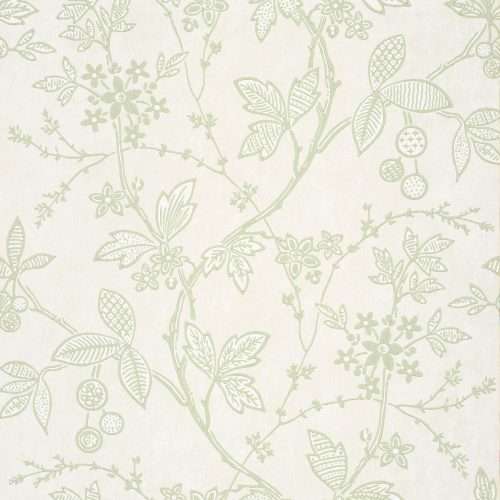
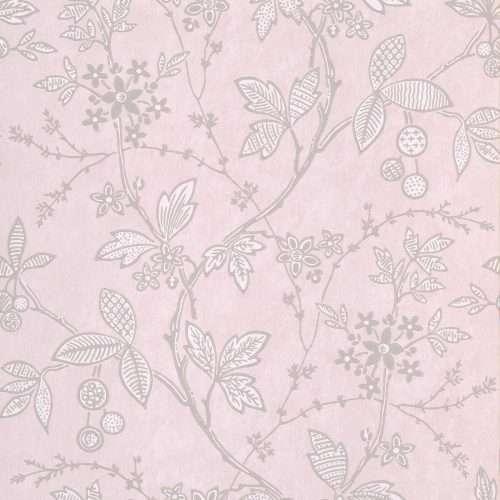
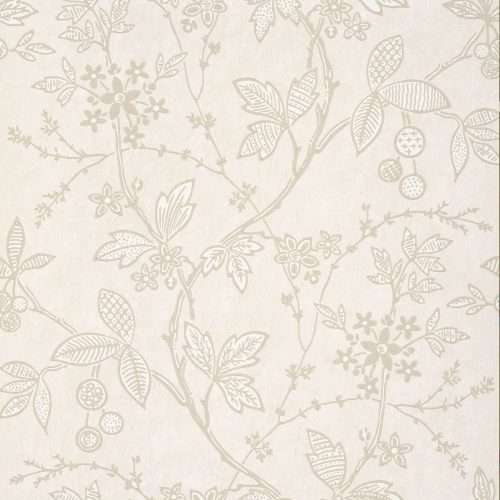
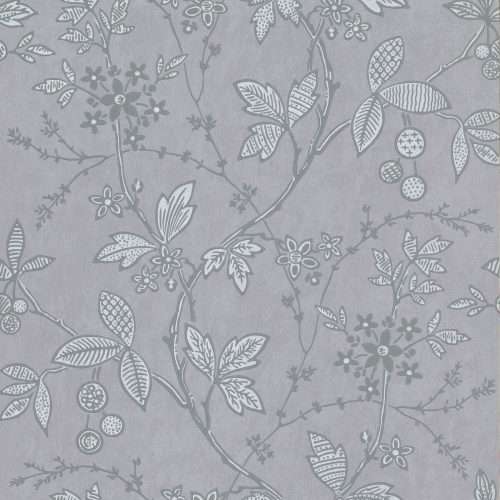
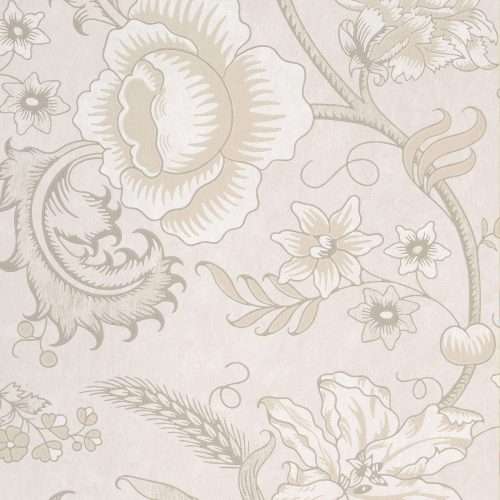
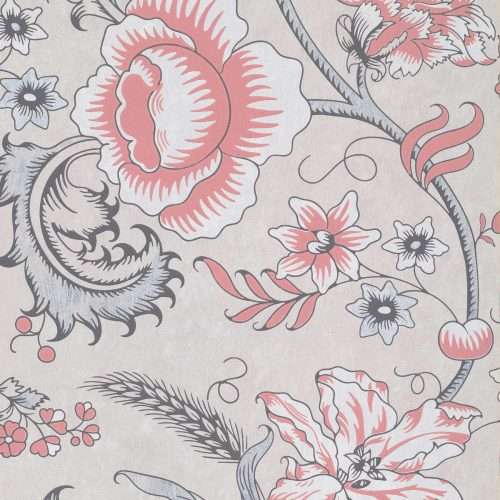
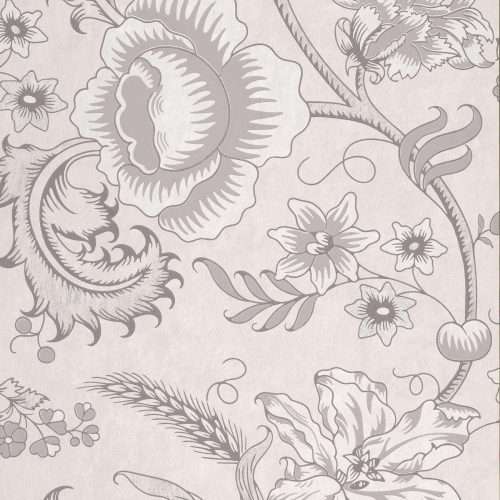
 Derived from an interesting piece in the English Heritage Archive, this design is particularly noteworthy for the style of drawing used to create the all-over trail effect. A structured, wandering stem is adorned by rather relaxed, almost sketch-like interpretations of leaves and fruit. At a glance, it is more mid-20th century in style than its actual origin of a hundred years earlier. Available in five colourways.
 -
Derived from an interesting piece in the English Heritage Archive, this design is particularly noteworthy for the style of drawing used to create the all-over trail effect. A structured, wandering stem is adorned by rather relaxed, almost sketch-like interpretations of leaves and fruit. At a glance, it is more mid-20th century in style than its actual origin of a hundred years earlier. Available in five colourways.
-
Derived from an interesting piece in the English Heritage Archive, this design is particularly noteworthy for the style of drawing used to create the all-over trail effect. A structured, wandering stem is adorned by rather relaxed, almost sketch-like interpretations of leaves and fruit. At a glance, it is more mid-20th century in style than its actual origin of a hundred years earlier. Available in five colourways.
-
Derived from an interesting piece in the English Heritage Archive, this design is particularly noteworthy for the style of drawing used to create the all-over trail effect. A structured, wandering stem is adorned by rather relaxed, almost sketch-like interpretations of leaves and fruit. At a glance, it is more mid-20th century in style than its actual origin of a hundred years earlier. Available in five colourways.
-
Derived from an interesting piece in the English Heritage Archive, this design is particularly noteworthy for the style of drawing used to create the all-over trail effect. A structured, wandering stem is adorned by rather relaxed, almost sketch-like interpretations of leaves and fruit. At a glance, it is more mid-20th century in style than its actual origin of a hundred years earlier. Available in five colourways.
-
An early block print design, the original paper once adorned the walls of a ground floor room, most probably a dining room, in a historic house in Salisbury, Wiltshire. Its simple graphic elements are typical of a design that would have been cut from wood and applied by hand with the assistance of a suspended block press. Although the application of several print colours required the dedication and accuracy of a master craftsman, wallpaper as decoration at this time was the preserve of the privileged few and, as such, expensive statement designs were in higher demand than cheaper alternatives. Available in four colourways.
-
An early block print design, the original paper once adorned the walls of a ground floor room, most probably a dining room, in a historic house in Salisbury, Wiltshire. Its simple graphic elements are typical of a design that would have been cut from wood and applied by hand with the assistance of a suspended block press. Although the application of several print colours required the dedication and accuracy of a master craftsman, wallpaper as decoration at this time was the preserve of the privileged few and, as such, expensive statement designs were in higher demand than cheaper alternatives. Available in four colourways.
-
An early block print design, the original paper once adorned the walls of a ground floor room, most probably a dining room, in a historic house in Salisbury, Wiltshire. Its simple graphic elements are typical of a design that would have been cut from wood and applied by hand with the assistance of a suspended block press. Although the application of several print colours required the dedication and accuracy of a master craftsman, wallpaper as decoration at this time was the preserve of the privileged few and, as such, expensive statement designs were in higher demand than cheaper alternatives. Available in four colourways.
-
An early block print design, the original paper once adorned the walls of a ground floor room, most probably a dining room, in a historic house in Salisbury, Wiltshire. Its simple graphic elements are typical of a design that would have been cut from wood and applied by hand with the assistance of a suspended block press. Although the application of several print colours required the dedication and accuracy of a master craftsman, wallpaper as decoration at this time was the preserve of the privileged few and, as such, expensive statement designs were in higher demand than cheaper alternatives. Available in four colourways.
-
Created through the simplification and reduction of the larger ‘Woodblock Trail’ paper and represents the trend throughout the ages for varying the scales of designs to create different visual effects. Rather more delicate, and infinitely usable in a smaller space, this monochrome version is available in five colourways.
-
Created through the simplification and reduction of the larger ‘Woodblock Trail’ paper and represents the trend throughout the ages for varying the scales of designs to create different visual effects. Rather more delicate, and infinitely usable in a smaller space, this monochrome version is available in five colourways.
-
Created through the simplification and reduction of the larger ‘Woodblock Trail’ paper and represents the trend throughout the ages for varying the scales of designs to create different visual effects. Rather more delicate, and infinitely usable in a smaller space, this monochrome version is available in five colourways.
-
Created through the simplification and reduction of the larger ‘Woodblock Trail’ paper and represents the trend throughout the ages for varying the scales of designs to create different visual effects. Rather more delicate, and infinitely usable in a smaller space, this monochrome version is available in five colourways.
-
Created through the simplification and reduction of the larger ‘Woodblock Trail’ paper and represents the trend throughout the ages for varying the scales of designs to create different visual effects. Rather more delicate, and infinitely usable in a smaller space, this monochrome version is available in five colourways.
-
The second paper in this collection taken from Brooke House in Hackney, East London. For a long period, Brooke House was home to a private hospital and this design takes its name from one of its significant 19th century owners: a Dr John Monroe. The pattern is recreated from a relatively small remnant found by English Heritage before the house was pulled down in the 1950s. It is undoubtedly inspired by the Art & Crafts Movement and its familiarity would have been used to help hospital patients feel comfortable and aid their recovery. Available in five colourways.
-
The second paper in this collection taken from Brooke House in Hackney, East London. For a long period, Brooke House was home to a private hospital and this design takes its name from one of its significant 19th century owners: a Dr John Monroe. The pattern is recreated from a relatively small remnant found by English Heritage before the house was pulled down in the 1950s. It is undoubtedly inspired by the Art & Crafts Movement and its familiarity would have been used to help hospital patients feel comfortable and aid their recovery. Available in five colourways.
-
The second paper in this collection taken from Brooke House in Hackney, East London. For a long period, Brooke House was home to a private hospital and this design takes its name from one of its significant 19th century owners: a Dr John Monroe. The pattern is recreated from a relatively small remnant found by English Heritage before the house was pulled down in the 1950s. It is undoubtedly inspired by the Art & Crafts Movement and its familiarity would have been used to help hospital patients feel comfortable and aid their recovery. Available in five colourways.
-
The second paper in this collection taken from Brooke House in Hackney, East London. For a long period, Brooke House was home to a private hospital and this design takes its name from one of its significant 19th century owners: a Dr John Monroe. The pattern is recreated from a relatively small remnant found by English Heritage before the house was pulled down in the 1950s. It is undoubtedly inspired by the Art & Crafts Movement and its familiarity would have been used to help hospital patients feel comfortable and aid their recovery. Available in five colourways.
-
The second paper in this collection taken from Brooke House in Hackney, East London. For a long period, Brooke House was home to a private hospital and this design takes its name from one of its significant 19th century owners: a Dr John Monroe. The pattern is recreated from a relatively small remnant found by English Heritage before the house was pulled down in the 1950s. It is undoubtedly inspired by the Art & Crafts Movement and its familiarity would have been used to help hospital patients feel comfortable and aid their recovery. Available in five colourways.
-
A surface-printed design featuring exotic Lory birds and oriental blossom, which has been inspired by a charismatic 20th century piece held by the Whitworth Art Gallery in Manchester. The exotic subject matter and almost symmetrical repeat are typical of 1930s designs and reflect the aspirations of travel to distant lands and a show of wealth to visitors to the house. Although recoloured for today’s home, the selected colourways bear testament to the use of bright colours, commonplace in the 1930s, and the Lory may have been chosen as a subject on these grounds alone! Available in five colourways.
-
A surface-printed design featuring exotic Lory birds and oriental blossom, which has been inspired by a charismatic 20th century piece held by the Whitworth Art Gallery in Manchester. The exotic subject matter and almost symmetrical repeat are typical of 1930s designs and reflect the aspirations of travel to distant lands and a show of wealth to visitors to the house. Although recoloured for today’s home, the selected colourways bear testament to the use of bright colours, commonplace in the 1930s, and the Lory may have been chosen as a subject on these grounds alone! Available in five colourways.
-
A surface-printed design featuring exotic Lory birds and oriental blossom, which has been inspired by a charismatic 20th century piece held by the Whitworth Art Gallery in Manchester. The exotic subject matter and almost symmetrical repeat are typical of 1930s designs and reflect the aspirations of travel to distant lands and a show of wealth to visitors to the house. Although recoloured for today’s home, the selected colourways bear testament to the use of bright colours, commonplace in the 1930s, and the Lory may have been chosen as a subject on these grounds alone! Available in five colourways.
-
A surface-printed design featuring exotic Lory birds and oriental blossom, which has been inspired by a charismatic 20th century piece held by the Whitworth Art Gallery in Manchester. The exotic subject matter and almost symmetrical repeat are typical of 1930s designs and reflect the aspirations of travel to distant lands and a show of wealth to visitors to the house. Although recoloured for today’s home, the selected colourways bear testament to the use of bright colours, commonplace in the 1930s, and the Lory may have been chosen as a subject on these grounds alone! Available in five colourways.
-
A surface-printed design featuring exotic Lory birds and oriental blossom, which has been inspired by a charismatic 20th century piece held by the Whitworth Art Gallery in Manchester. The exotic subject matter and almost symmetrical repeat are typical of 1930s designs and reflect the aspirations of travel to distant lands and a show of wealth to visitors to the house. Although recoloured for today’s home, the selected colourways bear testament to the use of bright colours, commonplace in the 1930s, and the Lory may have been chosen as a subject on these grounds alone! Available in five colourways.